World's Longest Underwater Tunnel Unveiled
RAILWAYS & METRO RAIL

World's Longest Underwater Tunnel Unveiled

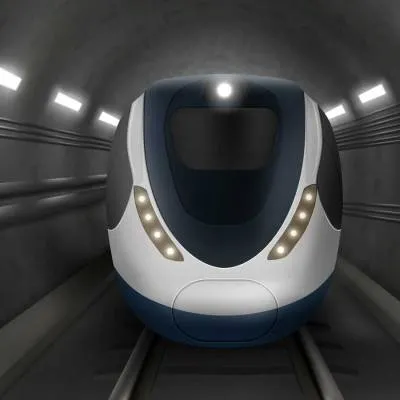
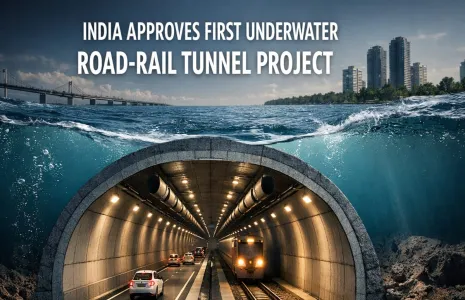
In a remarkable engineering feat, the world's longest (18 km) rail and road underwater tunnel, which will connect Denmark (Rødbyhavn) and Puttgarden on the German island of Femern by 2029 has been unveiled. The tunnel, officially called the Fehmarnbelt Fixed Link and designed for a minimum lifespan of 120 years, will have two double-lane motorways and two electrified rail tracks. When the €10 billion Fehmarnbelt tunnel, which is being constructed on the basis of a design philosophy called ‘design and build’ is completed, it will cut travel time down to 10 minutes by car and seven minutes by train from Rødbyhavn to Puttgarden, a crossing that now takes 45 minutes by ferry, also avoiding a 160 km detour across the Danish mainland. Rail travel times from Hamburg in Germany to Copenhagen in Demark will be cut from around five hours to less than three. Road users and train passengers will save about one hour each way compared to the ferry crossing. The link will be open 24 hours a day as a tunnel is not affected by wind or weather.

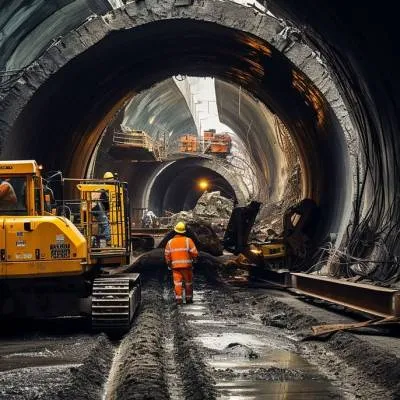
After 10 years of planning, construction began in 2020 on the Danish side and then in 2021 on the German side. For the tunnel, the European Union will contribute €1.1 billion towards the project. It will be put together 40 metres below the Baltic Sea using 89 massive concrete sections. These will be pre-built on land and then lowered into the water using a crane. Femern A/S, the state-owned Danish company in charge of the project, hopes that it will be ready to immerse the first of these sections by 2024. Once they are in place, the concrete sections will be fitted together and other elements like railway tracks, ventilation and cameras will be installed. Some environmental groups questioned the impact of the tunnel on wildlife in the Fehmarnbelt - an EU protected area. But Fermern A/S says the tunnel will “increase capacity and relieve congestion on the rail and road networks in Denmark”. The company also claims it will lead to “significant” savings in time, energy, fuel and CO2 emissions.

The first tunnel element is expected to be immersed in the Fehmarnbelt in 2024 in the special tunnel trench, which is currently being dredged. Over 90 per cent of the dredging operations have now been completed and the Fehmarnbelt link will open in 2029.

In a remarkable engineering feat, the world's longest (18 km) rail and road underwater tunnel, which will connect Denmark (Rødbyhavn) and Puttgarden on the German island of Femern by 2029 has been unveiled. The tunnel, officially called the Fehmarnbelt Fixed Link and designed for a minimum lifespan of 120 years, will have two double-lane motorways and two electrified rail tracks. When the €10 billion Fehmarnbelt tunnel, which is being constructed on the basis of a design philosophy called ‘design and build’ is completed, it will cut travel time down to 10 minutes by car and seven minutes by train from Rødbyhavn to Puttgarden, a crossing that now takes 45 minutes by ferry, also avoiding a 160 km detour across the Danish mainland. Rail travel times from Hamburg in Germany to Copenhagen in Demark will be cut from around five hours to less than three. Road users and train passengers will save about one hour each way compared to the ferry crossing. The link will be open 24 hours a day as a tunnel is not affected by wind or weather.After 10 years of planning, construction began in 2020 on the Danish side and then in 2021 on the German side. For the tunnel, the European Union will contribute €1.1 billion towards the project. It will be put together 40 metres below the Baltic Sea using 89 massive concrete sections. These will be pre-built on land and then lowered into the water using a crane. Femern A/S, the state-owned Danish company in charge of the project, hopes that it will be ready to immerse the first of these sections by 2024. Once they are in place, the concrete sections will be fitted together and other elements like railway tracks, ventilation and cameras will be installed. Some environmental groups questioned the impact of the tunnel on wildlife in the Fehmarnbelt - an EU protected area. But Fermern A/S says the tunnel will “increase capacity and relieve congestion on the rail and road networks in Denmark”. The company also claims it will lead to “significant” savings in time, energy, fuel and CO2 emissions.The first tunnel element is expected to be immersed in the Fehmarnbelt in 2024 in the special tunnel trench, which is currently being dredged. Over 90 per cent of the dredging operations have now been completed and the Fehmarnbelt link will open in 2029.

Next Story
Infrastructure Energy

Vedanta Aluminium Uses 1.57 bn Units of Green Energy in FY25

Vedanta Aluminium, India’s largest aluminium producer, recently reported consumption of 1.57 billion units of renewable energy in FY25, marking a significant milestone in its 2030 decarbonisation roadmap. The company also achieved an 8.96 per cent reduction in greenhouse gas (GHG) emissions intensity compared to FY21, reinforcing its leadership in India’s low-carbon manufacturing transition. During FY25, Vedanta Aluminium expanded its renewable energy portfolio through long-term power purchase agreements, strengthening its strategy to source nearly 1,500 MW of renewable power over the lon..

Next Story
Real Estate

Oberoi Group to Develop Luxury Resort at Makaibari Tea Estate

EIH Limited, the flagship company of The Oberoi Group, has announced the signing of a management agreement to develop an Oberoi luxury resort at the iconic Makaibari Tea Estate in Darjeeling. The project marks a key milestone in the Group’s long-term strategy of creating distinctive hospitality experiences in rare and environmentally significant locations. Established in 1859, Makaibari is one of the world’s oldest tea estates and is globally recognised for its Himalayan landscape, primary forests and exceptional biodiversity. Spread across 1,236 acres, the estate houses one of the world..

Next Story
Real Estate

GHV Infra Secures Rs 1.09 Bn EPC Order in Jamshedpur

GHV Infra Projects Ltd, a fast-growing EPC company in India’s infrastructure and construction sector, has recently secured a Rs 1.09 billion work order in Jamshedpur, Jharkhand. Awarded by a reputed group entity, the contract covers end-to-end civil construction, mechanical, electrical and plumbing (MEP) systems, along with high-quality finishing works for a large building development. The project will be executed over a 30-month period, with defined benchmarks for quality, safety and timely delivery. The order strengthens GHV Infra’s footprint in Jamshedpur, a key industrial hub known fo..

Advertisement

Subscribe to Our Newsletter

Get daily newsletters around different themes from Construction world.

STAY CONNECTED

Advertisement

Advertisement

Advertisement

Advertisement

Open In App