Rithala-Narela-Kundli metro: Centre approves construction
RAILWAYS & METRO RAIL

Rithala-Narela-Kundli metro: Centre approves construction

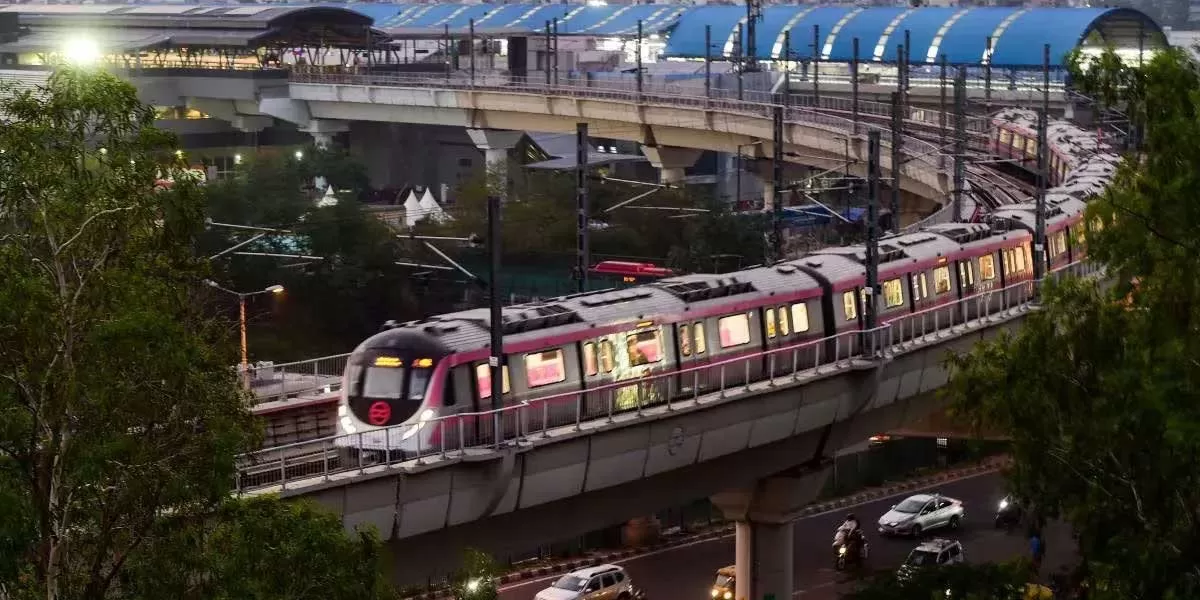
The Ministry of Housing and Urban Affairs-DDA proposal for the building of the Rithala-Narela-Kundli metro route has been approved by the Centre, according to a Raj Niwas release.It stated that Delhi Lieutenant Governor V. K. Saxena has discussed the building of this metro route with the Centre on several occasions. According to the announcement, the construction of the Rithala-Narela-Kundli metro line would cost Rs 62 billion, of which Rs 56 billion is expected to be spent in Delhi and Rs 5.45 billion in Haryana. The current Red line is intended to be extended along this area.

The national government is going to cover over 40 percent of the cost of the Delhi component. The Delhi Development Authority (DDA) would provide the remaining Rs 10 billion, while the Delhi government would provide around 20% of the capital, with 37.5% coming from bilateral and multilateral loans. Eighty percent of the subsidies for the Haryana component will come from the state government, with the remaining twenty percent coming from grants from the national government.

Within four years, this 26.5-kilometre route with 21 stops will be finished. According to the statement, it will significantly increase the areas of Narela, Bawana, and Alipur's connectivity with the rest of the city and spark an infrastructural boom.

Additionally, it will solve the long-standing needs of the Rohini sub-city and provide the Narela-Bawana sub-city with a boost in growth and development. The DDA said that the construction of this corridor will significantly benefit the Narela sub-city, where it is developing an education hub with campuses of seven Delhi universities and institutions, a multi-modal logistic park along UER-II, corporate offices/IT-ITeS Parks, and a medical campus including IGTUW and AIIMS.

The National Institute of Homoeopathy, Delhi Technological University, NIT Delhi, Raja Harish Chandra Hospital, Anaaj Mandi, Smriti Van, and other DDA housing developments are already located in the vicinity. It is projected that 1.26 lakh riders would use this corridor daily by 2028 and 3.8 lakh ridership daily by 2055, providing smooth interstate connectivity between Ghaziabad (Uttar Pradesh), Delhi, and Kundli (Haryana). the statement added. The seven Rohini sectors, villages such as Barwala, Sanoth, New Sanoth, and Narela, J J Colony, and two additional stations in the Bawana industrial area, as well as five stations in Narela "Anaaj Mandi, Narela DDA Sports Complex, Narela Village, Depot Station, and Narela Sector-5" will be the main stations on the line.

The Ministry of Housing and Urban Affairs-DDA proposal for the building of the Rithala-Narela-Kundli metro route has been approved by the Centre, according to a Raj Niwas release.It stated that Delhi Lieutenant Governor V. K. Saxena has discussed the building of this metro route with the Centre on several occasions. According to the announcement, the construction of the Rithala-Narela-Kundli metro line would cost Rs 62 billion, of which Rs 56 billion is expected to be spent in Delhi and Rs 5.45 billion in Haryana. The current Red line is intended to be extended along this area. The national government is going to cover over 40 percent of the cost of the Delhi component. The Delhi Development Authority (DDA) would provide the remaining Rs 10 billion, while the Delhi government would provide around 20% of the capital, with 37.5% coming from bilateral and multilateral loans. Eighty percent of the subsidies for the Haryana component will come from the state government, with the remaining twenty percent coming from grants from the national government. Within four years, this 26.5-kilometre route with 21 stops will be finished. According to the statement, it will significantly increase the areas of Narela, Bawana, and Alipur's connectivity with the rest of the city and spark an infrastructural boom. Additionally, it will solve the long-standing needs of the Rohini sub-city and provide the Narela-Bawana sub-city with a boost in growth and development. The DDA said that the construction of this corridor will significantly benefit the Narela sub-city, where it is developing an education hub with campuses of seven Delhi universities and institutions, a multi-modal logistic park along UER-II, corporate offices/IT-ITeS Parks, and a medical campus including IGTUW and AIIMS. The National Institute of Homoeopathy, Delhi Technological University, NIT Delhi, Raja Harish Chandra Hospital, Anaaj Mandi, Smriti Van, and other DDA housing developments are already located in the vicinity. It is projected that 1.26 lakh riders would use this corridor daily by 2028 and 3.8 lakh ridership daily by 2055, providing smooth interstate connectivity between Ghaziabad (Uttar Pradesh), Delhi, and Kundli (Haryana). the statement added. The seven Rohini sectors, villages such as Barwala, Sanoth, New Sanoth, and Narela, J J Colony, and two additional stations in the Bawana industrial area, as well as five stations in Narela Anaaj Mandi, Narela DDA Sports Complex, Narela Village, Depot Station, and Narela Sector-5 will be the main stations on the line.

Next Story
Infrastructure Energy

Vedanta Aluminium Uses 1.57 bn Units of Green Energy in FY25

Vedanta Aluminium, India’s largest aluminium producer, recently reported consumption of 1.57 billion units of renewable energy in FY25, marking a significant milestone in its 2030 decarbonisation roadmap. The company also achieved an 8.96 per cent reduction in greenhouse gas (GHG) emissions intensity compared to FY21, reinforcing its leadership in India’s low-carbon manufacturing transition. During FY25, Vedanta Aluminium expanded its renewable energy portfolio through long-term power purchase agreements, strengthening its strategy to source nearly 1,500 MW of renewable power over the lon..

Next Story
Real Estate

Oberoi Group to Develop Luxury Resort at Makaibari Tea Estate

EIH Limited, the flagship company of The Oberoi Group, has announced the signing of a management agreement to develop an Oberoi luxury resort at the iconic Makaibari Tea Estate in Darjeeling. The project marks a key milestone in the Group’s long-term strategy of creating distinctive hospitality experiences in rare and environmentally significant locations. Established in 1859, Makaibari is one of the world’s oldest tea estates and is globally recognised for its Himalayan landscape, primary forests and exceptional biodiversity. Spread across 1,236 acres, the estate houses one of the world..

Next Story
Real Estate

GHV Infra Secures Rs 1.09 Bn EPC Order in Jamshedpur

GHV Infra Projects Ltd, a fast-growing EPC company in India’s infrastructure and construction sector, has recently secured a Rs 1.09 billion work order in Jamshedpur, Jharkhand. Awarded by a reputed group entity, the contract covers end-to-end civil construction, mechanical, electrical and plumbing (MEP) systems, along with high-quality finishing works for a large building development. The project will be executed over a 30-month period, with defined benchmarks for quality, safety and timely delivery. The order strengthens GHV Infra’s footprint in Jamshedpur, a key industrial hub known fo..

Advertisement

Subscribe to Our Newsletter

Get daily newsletters around different themes from Construction world.

STAY CONNECTED

Advertisement

Advertisement

Advertisement

Advertisement

Open In App