Goyal urges real estate sector to embrace eco-friendly practices
Real Estate

Goyal urges real estate sector to embrace eco-friendly practices

Union Minister Piyush Goyal, in response to growing pollution concerns in the national capital, called on real estate developers to implement environmentally sustainable construction methods. Speaking at the 25th foundation day of the Confederation of Real Estate Developers' Associations of India (CREDAI), Goyal proposed that the industry body form a team to assess the impact of construction activities on air quality in 20 major cities.

The Minister emphasised the use of modern construction practices, such as steel and precast fabrication, to reduce pollution levels and expedite project timelines. “Adopting these methods will allow developers to expedite capital turnover, grow their businesses more efficiently, satisfy clients better, and improve overall construction quality,” Goyal stated. He encouraged CREDAI members to see this initiative as a mission and report back to the government.

Goyal also highlighted the importance of affordable rental housing to curb slum expansion in urban areas and reiterated the government's commitment to rehabilitating slum dwellers into proper homes. “Making rental housing more accessible can help prevent further slum development,” he said.

The Minister urged developers to pursue net-zero projects and incorporate eco-friendly features like EV charging points, waste recycling systems, and comprehensive green amenities. He also stressed the need for greater formalisation within the real estate sector, calling for developers to provide social security, healthcare, and retirement benefits for their workers, with enrolment in ESIC and EPFO.

Noting the positive impact of the Real Estate (Regulation and Development) Act (RERA), Goyal said the law has helped remove unreliable developers and boosted consumer trust in timely property delivery. He underscored the Modi government’s efforts over the past decade to enhance the ease of doing business, strengthen bank balance sheets, and reduce NPAs. CREDAI, established in 1999, represents over 13,000 real estate members across India.

(Business Standard) 

Union Minister Piyush Goyal, in response to growing pollution concerns in the national capital, called on real estate developers to implement environmentally sustainable construction methods. Speaking at the 25th foundation day of the Confederation of Real Estate Developers' Associations of India (CREDAI), Goyal proposed that the industry body form a team to assess the impact of construction activities on air quality in 20 major cities. The Minister emphasised the use of modern construction practices, such as steel and precast fabrication, to reduce pollution levels and expedite project timelines. “Adopting these methods will allow developers to expedite capital turnover, grow their businesses more efficiently, satisfy clients better, and improve overall construction quality,” Goyal stated. He encouraged CREDAI members to see this initiative as a mission and report back to the government. Goyal also highlighted the importance of affordable rental housing to curb slum expansion in urban areas and reiterated the government's commitment to rehabilitating slum dwellers into proper homes. “Making rental housing more accessible can help prevent further slum development,” he said. The Minister urged developers to pursue net-zero projects and incorporate eco-friendly features like EV charging points, waste recycling systems, and comprehensive green amenities. He also stressed the need for greater formalisation within the real estate sector, calling for developers to provide social security, healthcare, and retirement benefits for their workers, with enrolment in ESIC and EPFO. Noting the positive impact of the Real Estate (Regulation and Development) Act (RERA), Goyal said the law has helped remove unreliable developers and boosted consumer trust in timely property delivery. He underscored the Modi government’s efforts over the past decade to enhance the ease of doing business, strengthen bank balance sheets, and reduce NPAs. CREDAI, established in 1999, represents over 13,000 real estate members across India. (Business Standard) 

Next Story
Real Estate

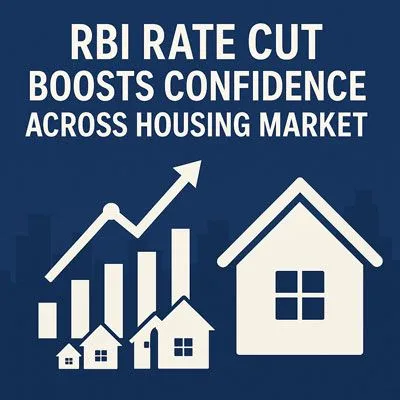
RBI Rate Cut Boosts Confidence Across Housing Market

Industry Context and Market DynamicsThe real estate industry has welcomed the RBI’s rate cut as a timely boost to affordability and demand. With home prices having risen steadily across major markets, even a marginal reduction in interest rates meaningfully strengthens purchasing power, especially for first-time and mid-income buyers.Ashish Jerath, President – Sales & Marketing, Smartworld Developers, observes:“The RBI’s 25-basis-point cut, bringing the repo rate down to 5.25%, is a timely boost for the real estate sector. Lower interest rates reduce borrowing costs, enabling homeb..

Next Story
Infrastructure Transport

BMC Resumes Rs 170 Billion Road Works, Targets 80 per cent By Jan 2026

Following the withdrawal of the southwest monsoon in October, the Brihanmumbai Municipal Corporation (BMC) has restarted work on 645 roads—covering 297.49 kilometres—under its large-scale concretisation programme. Data shows that more than 60 per cent of the resumed works are located in the western suburbs. Officials said the civic body aims to complete concretisation on 80 per cent of the roads where fresh work has begun by January 2026. Launched in 2022, the Rs 170 billion project seeks to concretise 700 kilometres of roads across Mumbai. All civil works were halted during the monsoon ..

Next Story
Infrastructure Urban

India Pushes Digital Shift In Urban Land Mapping

The Department of Land Resources (DoLR) under the Ministry of Rural Development has convened a National Symposium on NAKSHA – the National Geospatial Knowledge-based Land Survey of Urban Habitations – to advance India’s transition to modern, technology-driven land mapping. Speaking at the inaugural session, Secretary Manoj Joshi underscored the urgent need to move revenue departments away from outdated, tape-based methods and rough hand-drawn sketches. He stressed that adopting latitude–longitude-based digital mapping and GIS-linked registration systems is essential for economic stabi..

Advertisement

Subscribe to Our Newsletter

Get daily newsletters around different themes from Construction world.

STAY CONNECTED

Advertisement

Advertisement

Advertisement

Advertisement

Open In App