Maersk's $750M Green Bond Fuels Carbon Emission Cuts
POWER & RENEWABLE ENERGY

Maersk's $750M Green Bond Fuels Carbon Emission Cuts

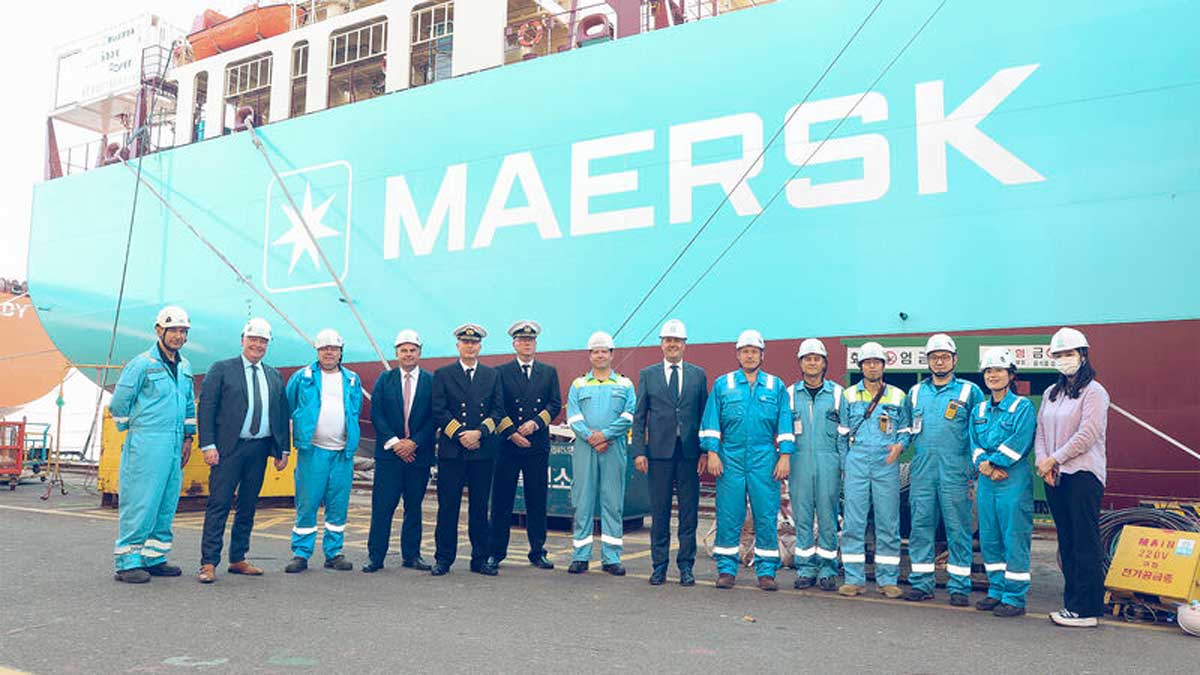
The world's largest container shipping firm, A.P. Moller-Maersk, has introduced a $750 million green bond aimed at funding its efforts to reduce carbon emissions. This bond, with a maturity of 10 years, will offer a yield of 1.65 percentage points above Treasuries.

Soren Skou, the CEO of Maersk, emphasized the significance of this green bond as a reflection of the company's dedication to curbing greenhouse gas emissions. He highlighted Maersk's ongoing work to decarbonize its fleet and operations, expressing confidence that this bond will facilitate progress toward their net-zero emissions goal.

The funds raised through this bond will be allocated to finance or refinance green assets, encompassing fixed assets, capital and operational expenses, and even acquisitions of companies generating at least 90% of their revenue from environmentally responsible activities, such as clean transportation and sustainable building projects.

Carolina Dybeck Happe, the CFO of Maersk, acknowledged the robust demand for their green bond, interpreting it as a sign of increasing investor interest in supporting organizations actively combatting climate change. However, she also acknowledged the challenges facing the shipping sector's decarbonization efforts, including the complex and costly nature of this transformation and the potential impact of declining demand for container shipping on the company's financial performance.

Despite these hurdles, Maersk remains steadfast in its commitment to decarbonize its fleet, citing environmental and business reasons for doing so.

This green bond sale also serves as a litmus test for investor appetite in the Uited States for green bonds. Sustainable bond sales have experienced a downturn in the US due to political opposition to investments tied to environmental, social, and governance goals. Nevertheless, Maersk's robust credit rating and unwavering commitment to decarbonization could attract investors who align with the company's objectives.

Carolina Dybeck Happe expressed confidence in the bond's success, highlighting Maersk's impressive track record in decarbonization and their resolute dedication to achieving their net-zero emissions goal.

In January 2022, Maersk announced its intention to achieve net-zero greenhouse gas emissions by 2040, a decade earlier than its initial target of 2050. Their 2030 targets include a 50% reduction in emissions per container transported by the Maersk Ocean fleet and a 70% reduction in absolute emissions from fully controlled terminals.

The bond issuance was managed by Barclays Plc, Citigroup Inc., HSBC Holdings Plc, JPMorgan Chase & Co., and Morgan Stanley.

See also:
Centre to fund nearly 30% of national green shipping ventures
India soon to implement green port policy

The world's largest container shipping firm, A.P. Moller-Maersk, has introduced a $750 million green bond aimed at funding its efforts to reduce carbon emissions. This bond, with a maturity of 10 years, will offer a yield of 1.65 percentage points above Treasuries. Soren Skou, the CEO of Maersk, emphasized the significance of this green bond as a reflection of the company's dedication to curbing greenhouse gas emissions. He highlighted Maersk's ongoing work to decarbonize its fleet and operations, expressing confidence that this bond will facilitate progress toward their net-zero emissions goal. The funds raised through this bond will be allocated to finance or refinance green assets, encompassing fixed assets, capital and operational expenses, and even acquisitions of companies generating at least 90% of their revenue from environmentally responsible activities, such as clean transportation and sustainable building projects. Carolina Dybeck Happe, the CFO of Maersk, acknowledged the robust demand for their green bond, interpreting it as a sign of increasing investor interest in supporting organizations actively combatting climate change. However, she also acknowledged the challenges facing the shipping sector's decarbonization efforts, including the complex and costly nature of this transformation and the potential impact of declining demand for container shipping on the company's financial performance. Despite these hurdles, Maersk remains steadfast in its commitment to decarbonize its fleet, citing environmental and business reasons for doing so. This green bond sale also serves as a litmus test for investor appetite in the Uited States for green bonds. Sustainable bond sales have experienced a downturn in the US due to political opposition to investments tied to environmental, social, and governance goals. Nevertheless, Maersk's robust credit rating and unwavering commitment to decarbonization could attract investors who align with the company's objectives. Carolina Dybeck Happe expressed confidence in the bond's success, highlighting Maersk's impressive track record in decarbonization and their resolute dedication to achieving their net-zero emissions goal. In January 2022, Maersk announced its intention to achieve net-zero greenhouse gas emissions by 2040, a decade earlier than its initial target of 2050. Their 2030 targets include a 50% reduction in emissions per container transported by the Maersk Ocean fleet and a 70% reduction in absolute emissions from fully controlled terminals. The bond issuance was managed by Barclays Plc, Citigroup Inc., HSBC Holdings Plc, JPMorgan Chase & Co., and Morgan Stanley. See also: Centre to fund nearly 30% of national green shipping venturesIndia soon to implement green port policy

Next Story
Real Estate

AI: The New Recruit

From getting ideas to evaluating designs, presenting concepts to clients and tracking projects, artificial intelligence (AI) is helping architects work better and faster.“AI allows architects to spend more time doing what only they can do: think critically, synthesise complexity and design with intent,” says Dikshu C Kukreja, Managing Principal, CP Kukreja Architects. “Every minute reclaimed from repetitive processes can be invested in creativity, contextual understanding, interdisciplinary collaboration and innovation – the qualities that define meaningful architecture.”To read the ..

Next Story
Real Estate

Redevelopment 2.0

In 2017, Mumbai identified 160,000 ageing buildings due for structural audit. Close to half of these were in the Western Suburbs. Redeveloping the oldest and structurally weakest of these would help unlock new housing, much needed given the city’s growing population density and constant developed area of 437.7 sq km. At 30,600 people per sq km in 2024, Mumbai’s density was almost thrice that of Gurugram, and 60 per cent higher than Bengaluru’s.Essentially, Mumbai’s realty market has demand. It has capital. It has realty development potential.Fast forward to 2026. Mumbai has 1,094 regis..

Next Story
Technology

Cost intelligence will become a strategic contributor to project success

As India's construction industry accelerates its digital transformation, integrated platforms, AI and connected data are becoming essential to improving cost certainty, project efficiency and sustainability. Ravi Kumar, Sales Director – India, RIB Software India, shares how digital workflows are reshaping project planning, commercial management and decision-making across the construction value chain.India's construction sector is embracing digital technologies at an unprecedented pace. From your perspective, what are the biggest shifts driving this transformation and how is RIB Software enab..

Advertisement

Subscribe to Our Newsletter

Get daily newsletters around different themes from Construction world.

STAY CONNECTED

Advertisement

Advertisement

Advertisement