Global Electronics Association Launches IPC-1783-CO2E Standard
POWER & RENEWABLE ENERGY

Global Electronics Association Launches IPC-1783-CO2E Standard

The Global Electronics Association has introduced IPC-1783-CO2E, a new international standard aimed at improving consistency, transparency and comparability in product carbon footprint reporting across the electronics manufacturing industry.
The standard, titled International Standard for Data Collection and Reporting of CO2 Equivalent (CO2e) Emissions for the Electronics Manufacturing Supply Chain, provides industry-specific guidance for collecting, estimating and reporting carbon emissions data.
With increasing regulatory requirements and customer expectations, electronics manufacturers face challenges in comparing emissions data collected through different methodologies. IPC-1783-CO2E addresses these gaps by establishing a common framework for product-level carbon footprint calculations across complex, multi-tier supply chains.
Francis D’Souza, Task Group Chair for IPC-1783-CO2E and CEO, banyan.eco, said the standard provides a practical, standardised approach to emissions reporting, helping manufacturers improve data quality and strengthen confidence in reported information.
The framework introduces activity and process models for calculating CO2e emissions, supported by data-quality indicators and methodology guidance. It also aligns with recognised Greenhouse Gas Protocol and International Organization for Standardization (ISO) principles.
Chris Jorgensen, Senior Director, Standards, Global Electronics Association, highlighted the importance of reliable carbon footprint data in globally interconnected electronics supply chains.
The standard is expected to support sustainability, environmental compliance, procurement and manufacturing professionals in improving emissions reporting, addressing regulatory expectations and advancing sustainability initiatives across the electronics industry.

The Global Electronics Association has introduced IPC-1783-CO2E, a new international standard aimed at improving consistency, transparency and comparability in product carbon footprint reporting across the electronics manufacturing industry.The standard, titled International Standard for Data Collection and Reporting of CO2 Equivalent (CO2e) Emissions for the Electronics Manufacturing Supply Chain, provides industry-specific guidance for collecting, estimating and reporting carbon emissions data.With increasing regulatory requirements and customer expectations, electronics manufacturers face challenges in comparing emissions data collected through different methodologies. IPC-1783-CO2E addresses these gaps by establishing a common framework for product-level carbon footprint calculations across complex, multi-tier supply chains.Francis D’Souza, Task Group Chair for IPC-1783-CO2E and CEO, banyan.eco, said the standard provides a practical, standardised approach to emissions reporting, helping manufacturers improve data quality and strengthen confidence in reported information.The framework introduces activity and process models for calculating CO2e emissions, supported by data-quality indicators and methodology guidance. It also aligns with recognised Greenhouse Gas Protocol and International Organization for Standardization (ISO) principles.Chris Jorgensen, Senior Director, Standards, Global Electronics Association, highlighted the importance of reliable carbon footprint data in globally interconnected electronics supply chains.The standard is expected to support sustainability, environmental compliance, procurement and manufacturing professionals in improving emissions reporting, addressing regulatory expectations and advancing sustainability initiatives across the electronics industry.

Related Stories

Gold Stories

Next Story
Real Estate

Born Smart or Built Smart?

In residential projects where the homeowner has a clear requirement for extensive automation, the smart-home brief should influence the design from the outset. CW explores exactly how such mandates influence design-development. QUICK BYTESIntegrate smart technology with architecture, interiors and MEP from the outset.Let residents’ needs and routines guide automation.Integrate sensors, wiring and controls without compromising design.Build flexible infrastructure for evolving technologies.Smart systems should be simple, reliable and easy to use.Existing homes can be retrofitted with mini..
Next Story
Technology

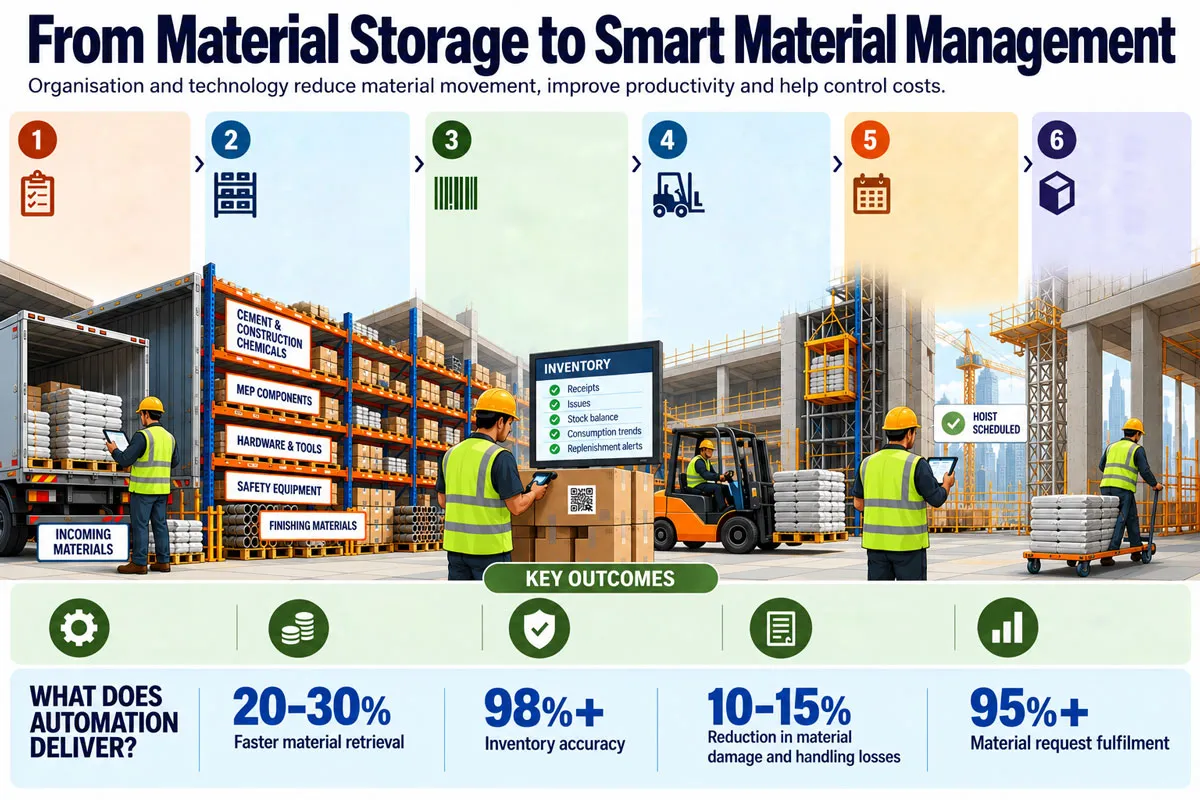
Move Less, Build More

On high-rise sites in Mumbai, until a few years ago, the common material handling solution was manpower and the repeated relocation of material until it finally reached the floor where it was to be installed.Cut to today. “Now, we are adopting automation in material handling, not to replace people but to reduce unnecessary movement, improve planning, and use people and equipment more efficiently,” says Raahul Maroo, Founder & Managing Director, Tat:vm Builders and Developers.To read the full article Click Here ..

Next Story
Infrastructure Urban

Law and Order

In modern economies, construction projects serve as a catalyst for economic growth and national development. In India, the construction industry plays a vital role in infrastructure development, urbanisation and employment generation. However, these projects involve significant financial, contractual, legal, environmental and safety risks, necessitating an effective legal framework to regulate their execution.The India perspectiveConstruction projects are governed by various legal and regulatory requirements relating to land acquisition, planning permissions, labour welfare, environmental clea..

Advertisement

Subscribe to Our Newsletter

Get daily newsletters around different themes from Construction world.

STAY CONNECTED

Advertisement

SPECIAL OFFER
QR Code