

COVID-19 Impact on the Architecture Industry
Real Estate

COVID-19 Impact on the Architecture Industry

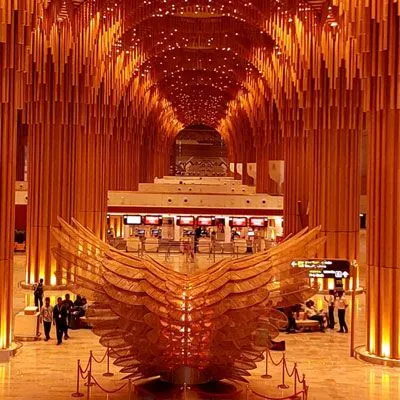
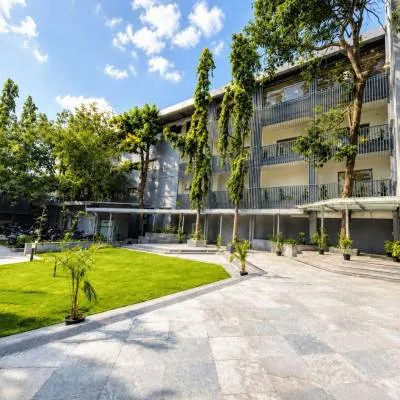
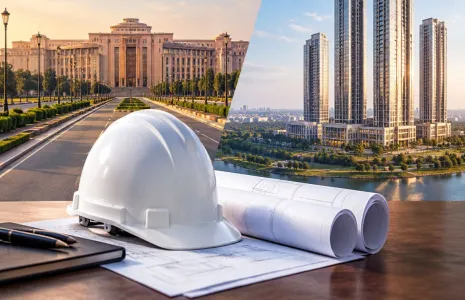
Photo: For representational purpose

For many in the architecture and design community, the rapid spread of COVID-19 has caused them to reevaluate their life’s work, and it might mean that architects have to design for a world that will never be quite the same. Core architecture is practiced on the ground, at the building site and it is essential for the architect to witness ongoing construction at every step. With project delivery deadlines already stretched, an immediate need arises to find alternatives that can aid in damage control. The lockdown rightly imposed by the governments have affected the timeline of on-going and future projects. In addition to contract provisions relating to scheduling, timing and completion of work, other contractual covenants may be implicated in disputes between owners and contractors as a result of COVID-19.

Before trying to explain the impact of Coronavirus in the architecture and construction industry, Ar Manish Dikshit, Founding Partner & Design Principal, Aum Architects, throws light on the bigger picture. “Three important points which needs to be attended globally are the health, economy and civil unrest. If these are taken care of, globally, it will prevent any downfall of businesses. We, as architectural professionals, should ensure we participate in ensuring the above and play our part to make our future better and just not expecting our governments to do miracles. The lockdown is currently affecting our income, which will soon start pinching our functionality. We as an ethical organisation, planned to take a salary cut across the board. This will ensure no one is left to fend for themselves. Our team has gracefully accepted our solution too. Along with our design studio, we have reached out to our contraction consultants to check if they need any sort of assistance during this time and monitor it on a regular basis.”

Leading architectural firm Designers Group is of the opinion that this pandemic comes with implications for the world economy. Principal Architect and Designer, Ar Khozema Chitalwala, feels that “In today's time with technology, collaborative and creative work can be done sitting at various locations. But we need to physically inspect sites under construction and on-ground interaction is essential for an architect. To see his designs transform to reality, from a piece of paper to a 3D structure is every architect’s dream.”

“When everything around you is at a standstill, there is absolutely no scope for new architectural projects”, says Ar Abhigyan Neogi, Principal Architect and Founder, Chromed Design Studio. A lot of architects are using this time to future proof their designs and investing their time to prepare after the lockdown is over. Thirty per cent of the architects are working and using this time to be well equipped when all this ends, but for the rest 70 per cent, work has come to an abrupt halt since there is absolutely no monetary transaction. As the ongoing construction sites are shut, it will at least take two months to resume services, especially for the labour class which has gone back to their hometown. After the lockdown is over, it will take another 30 days to neutralise the whole premise for people to come back and resume work”.

Ar Love Choudhary, Founding Principal, AND Studio, is also bearing the brunt of this pandemic just like his contemporaries. “Projects which are in the design stage are getting major hits as many clients who had started the project are shelving due to the market predictions of crashing. As a consequence, this will affect their business to the point that the projects are being considered luxury spending which can delay the projects which have moved to tender stages. The projects which are in construction are shut as per government guidelines. These projects will be delayed in delivery, which affects everyone – from clients to architects.”

Photo: For representational purposeFor many in the architecture and design community, the rapid spread of COVID-19 has caused them to reevaluate their life’s work, and it might mean that architects have to design for a world that will never be quite the same. Core architecture is practiced on the ground, at the building site and it is essential for the architect to witness ongoing construction at every step. With project delivery deadlines already stretched, an immediate need arises to find alternatives that can aid in damage control. The lockdown rightly imposed by the governments have affected the timeline of on-going and future projects. In addition to contract provisions relating to scheduling, timing and completion of work, other contractual covenants may be implicated in disputes between owners and contractors as a result of COVID-19. Before trying to explain the impact of Coronavirus in the architecture and construction industry, Ar Manish Dikshit, Founding Partner & Design Principal, Aum Architects, throws light on the bigger picture. “Three important points which needs to be attended globally are the health, economy and civil unrest. If these are taken care of, globally, it will prevent any downfall of businesses. We, as architectural professionals, should ensure we participate in ensuring the above and play our part to make our future better and just not expecting our governments to do miracles. The lockdown is currently affecting our income, which will soon start pinching our functionality. We as an ethical organisation, planned to take a salary cut across the board. This will ensure no one is left to fend for themselves. Our team has gracefully accepted our solution too. Along with our design studio, we have reached out to our contraction consultants to check if they need any sort of assistance during this time and monitor it on a regular basis.” Leading architectural firm Designers Group is of the opinion that this pandemic comes with implications for the world economy. Principal Architect and Designer, Ar Khozema Chitalwala, feels that “In today's time with technology, collaborative and creative work can be done sitting at various locations. But we need to physically inspect sites under construction and on-ground interaction is essential for an architect. To see his designs transform to reality, from a piece of paper to a 3D structure is every architect’s dream.” “When everything around you is at a standstill, there is absolutely no scope for new architectural projects”, says Ar Abhigyan Neogi, Principal Architect and Founder, Chromed Design Studio. A lot of architects are using this time to future proof their designs and investing their time to prepare after the lockdown is over. Thirty per cent of the architects are working and using this time to be well equipped when all this ends, but for the rest 70 per cent, work has come to an abrupt halt since there is absolutely no monetary transaction. As the ongoing construction sites are shut, it will at least take two months to resume services, especially for the labour class which has gone back to their hometown. After the lockdown is over, it will take another 30 days to neutralise the whole premise for people to come back and resume work”. Ar Love Choudhary, Founding Principal, AND Studio, is also bearing the brunt of this pandemic just like his contemporaries. “Projects which are in the design stage are getting major hits as many clients who had started the project are shelving due to the market predictions of crashing. As a consequence, this will affect their business to the point that the projects are being considered luxury spending which can delay the projects which have moved to tender stages. The projects which are in construction are shut as per government guidelines. These projects will be delayed in delivery, which affects everyone – from clients to architects.”

Next Story
Technology

AI-Enabled Workflows Lift Profitability and Productivity

Organisations modernising frontline workflows with artificial intelligence, automation and real-time data are reporting stronger financial performance, higher productivity and improved employee engagement, according to a global study by Zebra Technologies and Oxford Economics.The research covered 1,000 senior leaders across retail, manufacturing, transportation and logistics in the US, Mexico, the UK, Germany, India, Japan, Australia and New Zealand.In transportation and logistics, 54 per cent of companies that improved picking and packing operations reported faster operational performance, wh..

Next Story
Real Estate

India Leads Global AI Readiness but Implementation Lags

Indian companies lead global averages across all eight artificial intelligence readiness indicators tracked by JLL, but only 19 per cent have started making changes to their workplaces, according to the JLL 2026 Future of Work Survey.The study found that 77 per cent of Indian business leaders expect AI to change their office requirements, creating a 58-percentage-point gap between awareness and implementation. The survey covered more than 2,200 CEOs, CFOs and real estate leaders across 21 countries during the first quarter of 2026.Despite concerns over automation, 58 per cent of Indian leaders..

Next Story
Equipment

Three WOLFF Cranes Build Riyadh Cable-Stayed Bridges

Three WOLFF 180 B luffing jib cranes are supporting the construction of two cable-stayed bridges alongside the existing Wadi Laban Bridge in Riyadh, Saudi Arabia. The project is being developed for the Royal Commission for Riyadh City and executed by the ICRC joint venture comprising IC Ictas and Al Rashid Trading & Contracting Company.The cranes are handling lifting operations including formwork, reinforcement, concrete placement, work platforms, surveying equipment and other construction materials. Each crane is fitted with a 40 m jib, reaches a hook height of 157 m and offers a maximum ..

Advertisement

Subscribe to Our Newsletter

Get daily newsletters around different themes from Construction world.

STAY CONNECTED

Advertisement

Advertisement

Advertisement